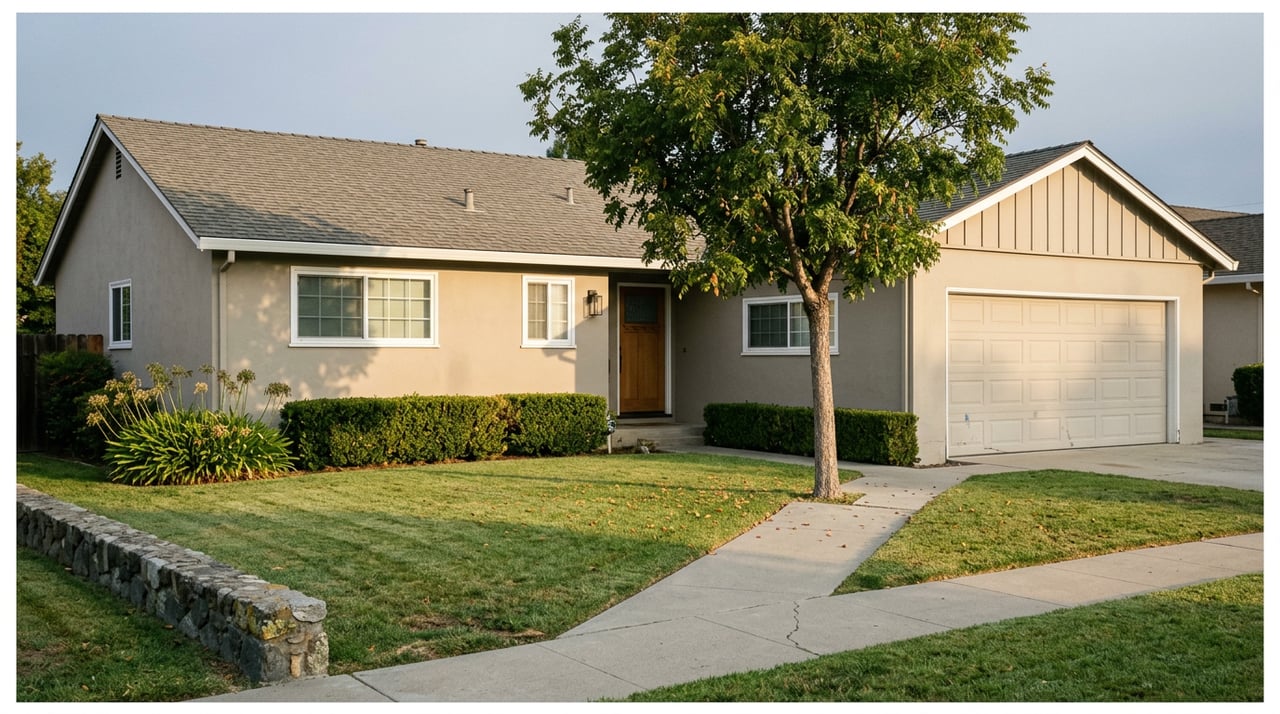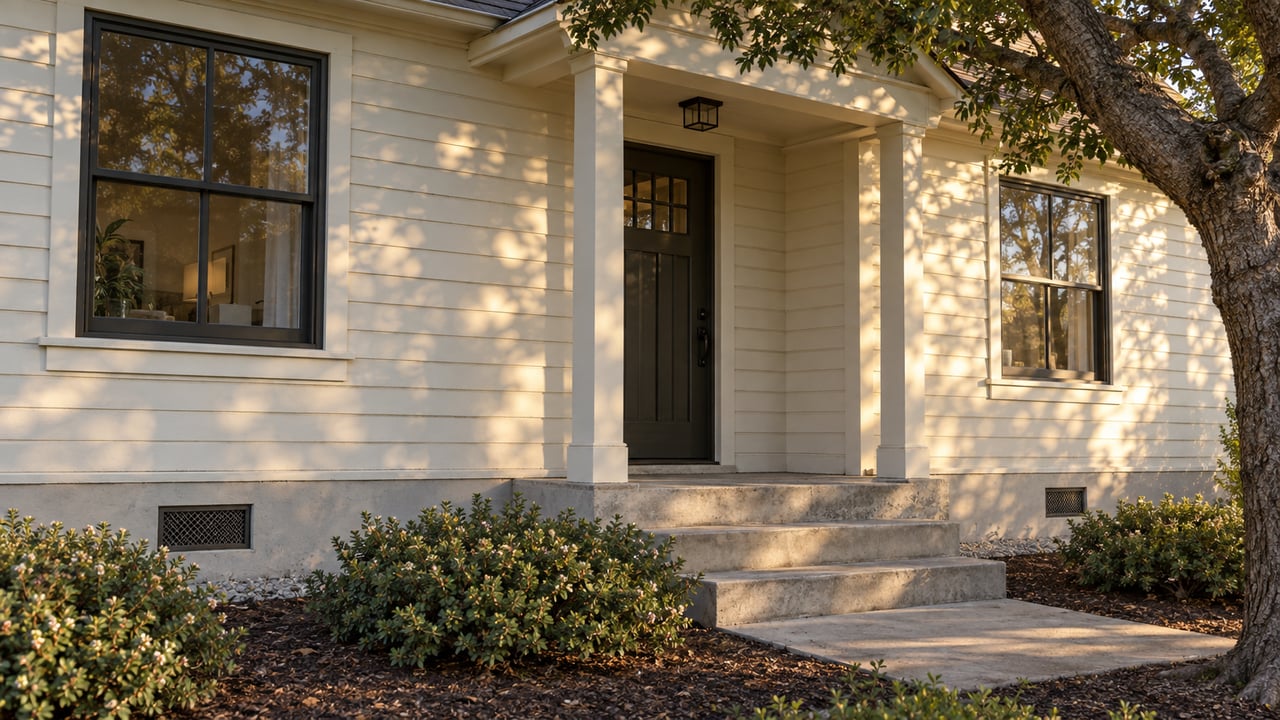
Walk a crawl space in a San Carlos bungalow built in the 1930s or 1940s and you will usually find the same two things: a wood-framed cripple wall standing on top of the concrete foundation with no bracing behind it, and a mudsill that was never bolted down. Neither one is dangerous on a calm day. Both are exactly what a home inspector flags the moment a buyer's contingency period opens, and in San Carlos that flag is showing up most often on the streets buyers are paying the most to win.
That is the part sellers in White Oaks and Howard Park do not always expect walking into a listing appointment. These two neighborhoods are San Carlos's most competitive, highest-per-square-foot addresses. They are also its oldest housing stock, built decades before California required a house to be physically anchored to its own foundation.
Two Neighborhoods, One Price Tier, One Construction Era
White Oaks, sometimes called by its older name El Sereno Corte, is filled with bungalows built mostly between 1920 and 1950. Howard Park, its closest rival for top dollar per square foot, is made up largely of single-family homes originally built in the 1940s, including on some of its most recognized streets like Knoll Drive and Eucalyptus Avenue. Oak Park, just to the south, traces back to the same Depression-era building wave, when builders who could not sell full-sized lots started cutting them in half to lower the tax burden for buyers.
These are not marginal neighborhoods. In 2025, Howard Park posted the highest average price per square foot in San Carlos at $1,556, edging out White Oaks for the top spot, with 25 single-family home sales that year against 17 the year before, and homes averaging around eight days on market. That is a market where a home goes under contract before most sellers finish unpacking their staging furniture.
Compare that to San Carlos's hillside pockets, Cordilleras Heights and the western foothills, where the houses tend to be newer and the diligence looks different. Parcels there face additional geotechnical review, and slope conditions can trigger a soils report during the inspection period. Nobody is asking about cripple walls on those streets. They are asking about drainage and grading.
So San Carlos actually runs two separate inspection conversations depending on which part of the city a buyer is touring. In the flats, in the neighborhoods commanding the highest prices, the conversation is about the foundation connection. In the hills, it is about the soil underneath. Sellers who assume their home's price tier tells them what an inspector will find have it backwards. Here, price tier and construction era point the same direction, toward the oldest bones getting the highest bids.
What the Crawl Space Conversation Actually Is
The fix for a raised-foundation home with an unbraced cripple wall is called a seismic retrofit, and it is narrower than it sounds. It means bolting the house's wood frame to its concrete foundation, and if there is a crawl space, bracing those short cripple walls with structural plywood so they cannot rack sideways. Homes built before 1980 with a raised foundation and a crawl space are the standard candidates. White Oaks and Howard Park's bungalow stock falls well inside that window, often by three or four decades.
California runs a state grant program for exactly this work. The Earthquake Brace + Bolt program, administered through the California Residential Mitigation Program, offers up to $3,000 toward a qualifying retrofit on a wood-framed, pre-1980 home with a raised foundation. Households earning $94,480 or less can qualify for an additional grant on top of that. Registration for the program opens for a limited window each year, so the timing has to line up with a seller's own schedule.
Cost for a standard foundation bolting and cripple wall bracing job on a typical Bay Area home runs $3,000 to $10,000, with permit fees in the range of $200 to $600 depending on the city. The construction itself usually takes just three to five days once a crew is on site. The slower part is everything around it. Engineering, permitting, and inspection can stretch the full project timeline out to two to six months, which matters if a seller is trying to knock this out before a listing goes live rather than mid-escrow under a deadline set by someone else.
Whether the Work Pays for Itself
This is the question that actually matters to a seller deciding whether to do this before listing or leave it for the buyer to negotiate. A stepwise regression analysis of California home sales found that in 2020, buyers paid 17 percent more for retrofitted houses built before 1940. For houses built between 1940 and 1959, the same analysis found buyers may have paid roughly 1 percent more, though that correlation was weak.
That split maps almost exactly onto San Carlos's own neighborhood ages. White Oaks and Oak Park skew toward the pre-1940 end of that range, where the price premium for a documented retrofit was strongest. Howard Park's stock, concentrated in the 1940s, sits closer to the weaker end of that data. It does not mean the work is worthless there. It means the resale case for doing it ahead of a listing is clearer on the older end of San Carlos's flats than on the newer end, and a seller weighing the cost against a firm closing date should know which side of that line their house falls on before deciding.
There is also an insurance angle worth having in hand. Retrofitted homes can qualify for a discount on earthquake insurance premiums through the California Earthquake Authority, which is a detail buyers researching coverage costs will eventually find on their own. Handing it to them upfront, along with a contractor's completed scope of work, changes the conversation from a repair request to a selling point.
What This Looks Like Against Today's Market
San Carlos itself is not a market where sellers have room to absorb a lot of downtime. In July 2026, the median single-family sale price in the city was $2,702,500, with homes averaging 22 days on market and selling at 109 percent of list price, against a 2025 annual median of $2,650,000. That is a tight, fast-moving market where a buyer paying above asking is not walking away over a cripple wall. They are far more likely to ask for a credit, a price reduction, or a completed retrofit as a condition of moving forward, and they are asking that request from a position where the seller already has multiple offers to weigh against it.
That is the practical argument for handling this before a house hits the market rather than during the inspection period. A seller in White Oaks or Howard Park who orders a crawl space inspection ahead of listing knows exactly what a buyer's inspector is going to find, has time to get a contractor's bid, and can decide with a clear head whether to complete the retrofit, price around it, or disclose it and let the market respond. Finding out for the first time during a five-day inspection contingency, with a buyer already anchored to a number, is a much worse position to negotiate from.
Frequently Asked Questions
Does California require a seismic retrofit before I can sell my San Carlos home? No state law or standard point-of-sale requirement forces this work at the time of a residential sale. It becomes relevant when a buyer's inspector identifies an unbolted mudsill or unbraced cripple wall and the buyer raises it during their contingency period, not as a mandatory checkbox in escrow.
My home is in Howard Park and was built in the 1940s. Is the retrofit still worth doing before I list? The resale premium data found a weaker, less consistent price bump for houses built between 1940 and 1959 compared to pre-1940 homes. It is still worth having a contractor's bid in hand so you know your real cost if a buyer requests it, even if the case for doing it purely to boost your list price is softer than it would be for an older White Oaks or Oak Park bungalow.
What if I'd rather not do the work before listing? Disclose the home's known foundation condition, price with it in mind, and keep a contractor's estimate ready. Buyers in a market moving at 109 percent of list price are unlikely to walk away over this, but they will likely come back with a request, and you want a number in hand rather than negotiating one on the spot.
If you own one of San Carlos's older bungalows in White Oaks, Howard Park, or Oak Park and you are trying to figure out whether a retrofit belongs on your pre-listing checklist or in your disclosure packet, Robert Pedro has walked enough of these crawl spaces on the Peninsula to help you make that call before your first showing, not during your first counteroffer.