Selling a waterfront home in Foster City is not the same as selling a home a few blocks inland. Buyers notice the view, the dock, the waterline, the rear landscaping, and the condition of every exterior feature that faces the lagoon or bay. If you want to make a strong first impression and avoid surprises during escrow, a smart pre-sale plan can help you present the property well, price it with confidence, and move faster. Let’s dive in.
Understand Foster City’s waterfront rules
Before you make repairs or book photos, it helps to understand what makes Foster City waterfront property unique. The city treats its lagoon and levee system as core infrastructure, with the lagoon serving as a drainage detention basin and the levee providing FEMA-certified base flood protection. The city also states that land within city limits remains Zone X, where mandatory flood insurance is not required, according to the City of Foster City lagoon and levee information.
Local rules also define waterfront property broadly. Under the Foster City municipal code, a parcel may be considered waterfront not only when it directly touches the bay or lagoon, but also when it sits within 100 feet of the water in some cases. That matters because waterfront-related design standards, maintenance expectations, and view considerations can affect how you prepare the home for market.
Focus on the water-facing side
In many home sales, sellers put most of their energy into curb appeal. In Foster City, your water-facing elevation deserves the same attention. The city states that owners are responsible for maintaining the portions of lagoon or waterfront properties directly adjacent to or observable from the water or land, based on the city’s lagoon system guidance.
That means buyers are likely to judge the back of the property as carefully as the front. Faded paint, worn decking, overgrown planting, visible storage, aging railings, or neglected dock areas can weaken your presentation even if the interior looks great. A tidy, intentional waterfront setting helps buyers focus on the lifestyle benefit of the location.
What to clean up first
Start with the features buyers will see right away from the house, patio, and shoreline.
- Pressure wash hard surfaces if needed
- Remove clutter from patios, side yards, and dock areas
- Trim landscaping to preserve clear sightlines
- Touch up exterior paint or stain where wear is obvious
- Check outdoor lighting, gates, and visible hardware
- Make sure railings and fencing look secure and consistent
Check dock and shoreline features early
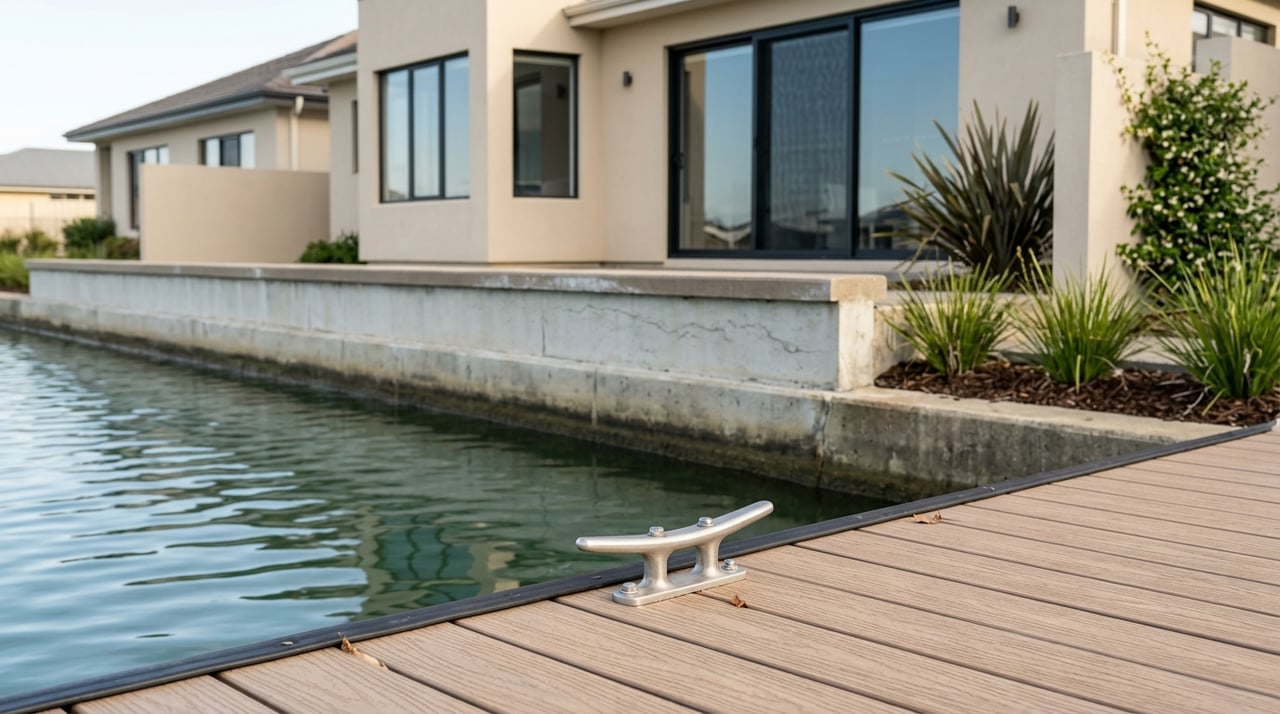
If your home has a dock, gangway, or other water-edge improvement, review it well before listing. Foster City’s boat dock policy says new docks and major reconstructions must go through the city’s waterfront permit and architectural review process. The policy also states that docks cannot contact lagoon walls, must be independently anchored, and require Public Works permission if a homeowner wants to deepen or dredge due to insufficient lagoon depth.
For sellers, the key issue is simple: do not market a dock feature casually without confirming its status. If records are incomplete or there are visible condition concerns, you may want to gather documentation, schedule inspections, or consult the appropriate professionals before the home goes live. Doing that early can help support cleaner disclosures and reduce buyer hesitation.
Dock questions worth answering before listing
- Was the dock built or modified with proper approvals?
- Have there been any major repairs or reconstructions?
- Is the dock independently anchored and not contacting the lagoon wall?
- Are there visible signs of wear, corrosion, movement, or deferred maintenance?
- Do you have records for work completed on the structure?
Review permits before making updates
A common mistake is assuming a small exterior project can be finished quickly without city review. In Foster City, exterior modifications may require Architectural Review and/or Planning approval. The city’s architectural review permit page also notes that HOA approval may be required when applicable, and neighbors are notified as part of the application process.
This is especially important for waterfront homes. Fence submittals on waterfront lots ask owners to consider adjacent views, and waterfront fences may require a site visit by Planning or Code Enforcement staff. Foster City’s general plan also says design review is used to balance property improvements with neighboring Bayfront or waterfront views, as outlined in the Land Use and Circulation Element.
If you are considering fresh fencing, a new railing, an exterior remodel, or other visible changes, check permit requirements first. You do not want unfinished work, expired approvals, or open permit questions interfering with your sale.
Start repairs earlier than you think
Timing matters when you are listing a waterfront property with any deferred maintenance or improvement needs. Foster City states that permit applications submitted on or after January 1, 2026 must comply with the 2025 California Building Standards Code adopted by the city. The city also notes that construction within the public right-of-way requires an encroachment permit.
The practical takeaway is to back up your timeline. If you hope to list in a specific season, start planning months ahead so repairs can be completed and signed off. Buyers tend to pay more attention to waterfront-condition details because the setting feels special and the visible exterior systems are part of the value.
Prepare disclosures with care
Waterfront homes often involve more disclosure detail than a standard sale. California’s Real Estate Transfer Disclosure Statement applies to transfers of one to four dwelling units and must be delivered as soon as practicable before transfer of title. The same Department of Real Estate guidance explains that the seller and agent must make a competent visual inspection and disclose material facts affecting value, desirability, and intended use.
For a Foster City waterfront property, that may include known issues involving the dock, retaining or shoreline-adjacent elements, drainage, leaks, corrosion, water intrusion, or prior repairs. If there is a concern about condition, a report from a licensed engineer or other qualified expert can help document the issue and support accurate disclosures. That kind of preparation often builds trust instead of creating alarm.
Disclosure items to gather early
- Prior repair invoices and contractor records
- Permit documents and final sign-offs
- Reports for dock, drainage, leak, or corrosion concerns
- HOA notices or correspondence, if applicable
- Any records related to unresolved exterior issues
Do not overlook hazard and HOA documents
Even in a lagoon community, the Natural Hazard Disclosure still matters. The California DRE explains in its disclosure guidance that the form covers mapped hazard categories such as special flood hazard areas, dam inundation areas, earthquake fault zones, and seismic hazard zones. Foster City states the city remains Zone X, but you still need to disclose parcel-specific knowledge and any applicable hazard conditions.
If your waterfront home is a condo or townhome with an HOA, document collection becomes even more important. Under California Civil Code Section 4525, owners must provide governing documents, assessments and fees, unpaid assessments or fines, and unresolved violation notices as soon as practicable before transfer of title or the sales contract. Buyers will often review these documents closely for rules on exterior maintenance, docks, and any special assessments tied to waterside upkeep.
Stage for views and sightlines
Waterfront staging is not only about furniture. In Foster City, it is also about preserving the feeling of openness. Since local planning guidance emphasizes balancing improvements with neighboring waterfront views, cluttered exterior areas, oversized plantings, or visual barriers can work against your home’s strongest selling feature.
Keep the eye moving toward the water. Open window coverings where privacy allows, simplify patio layouts, and reduce visual noise around fences, planters, hoses, bins, and storage. If the rear yard or deck feels clean and calm, buyers are more likely to connect emotionally with the setting.
Staging priorities for waterfront homes
- Highlight the main water view from key interior rooms
- Keep patios and decks lightly furnished and easy to walk through
- Remove anything that distracts from the shoreline
- Use simple greenery instead of dense or blocking landscaping
- Make rear lighting and evening ambiance feel intentional
Time photos around the lagoon cycle
Photography timing can make a real difference in Foster City. The city says lagoon water levels are typically raised around mid-March and lowered in mid-November, according to the lagoon system information. As a result, spring and early summer photography may show a fuller waterline and stronger dock presentation than winter images.
That does not mean you cannot sell in another season. It does mean you should think strategically about when to photograph the property and how the dock, shoreline, and rear elevation will look on camera. For some homes, waiting for fuller water levels can improve the visual story of the listing.
Remember that interiors still matter
A water view can get attention, but buyers still compare kitchens, layouts, and finish quality. Redfin reported a February 2026 Foster City median sale price of $1,548,750 and average market time of 18 days, while its three-month market page noted homes selling in about 16.5 days, with many multiple offers and around 2 percent above list price, based on the Foster City housing market page. That points to an active market, but not one where presentation mistakes disappear.
Redfin’s home feature trends for Foster City also suggest buyers respond to practical upgrades like hardwood floors, a new kitchen, quartz counters, backyard space, breakfast areas, and single-level layouts. In other words, the waterfront setting helps, but buyers still want a home that feels easy to live in. Your prep plan should support both the view and the everyday function.
Build a pre-sale plan that reduces surprises
The best waterfront sales usually start before the sign goes up. When you review permits, address visible maintenance, organize disclosures, and stage the home around its sightlines, you give buyers fewer reasons to hesitate. You also give yourself a stronger foundation for pricing and negotiation.
If you are thinking about selling your Foster City waterfront home, working with a local broker who understands Peninsula pricing, presentation, and prep can make the process much smoother. Connect with Robert Pedro for a personalized strategy on timing, pricing, and getting your home ready for market.
FAQs
What should you repair before selling a Foster City waterfront home?
- Focus first on visible exterior issues, especially the water-facing side, dock areas, railings, patios, landscaping, and any signs of deferred maintenance that buyers can easily see.
Do Foster City waterfront docks need permits or approvals?
- Yes. Foster City requires review for new docks and major reconstructions, so you should confirm permit history and compliance before advertising a dock as a selling feature.
Does a Foster City waterfront seller still need hazard disclosures?
- Yes. Even though Foster City states land within city limits remains Zone X, sellers still need to provide required disclosures and share any parcel-specific hazard knowledge.
Can you make exterior changes before listing a Foster City waterfront property?
- Possibly, but many exterior modifications in Foster City require Architectural Review and/or Planning approval, and HOA approval may also be required if your property is part of an association.
When is the best time to photograph a Foster City waterfront home for sale?
- Spring or early summer may offer a fuller lagoon waterline because the city typically raises lagoon levels around mid-March and lowers them in mid-November.