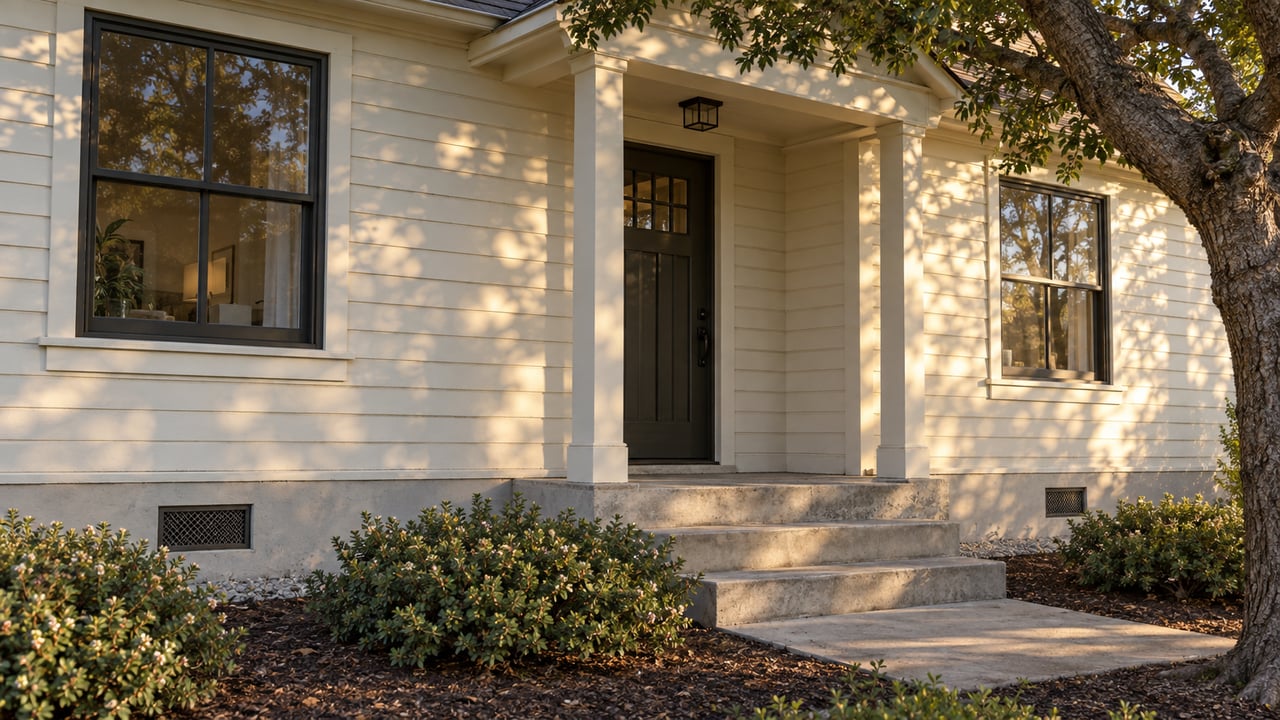
Pull up San Carlos on two different real estate data sites in the same week and you can walk away thinking you've found two different cities. One tool says prices are climbing by double digits. Another says the typical home value barely budged, or slipped. Neither is wrong. They're measuring different things, and the size of that gap is more useful to a buyer than either number on its own.
In March 2026, Redfin's sold-price median for San Carlos sat at $2.75 million, up 14 percent year over year. At the same time, Zillow's broader home-value index, which blends every property in the zip code rather than just what closed that month, read closer to $2.16 million. That's a $590,000 spread on the same city in the same window. It isn't a data error. It's a signal that San Carlos stopped being one market a while ago and started being several adjoining ones, each with its own price ceiling, and the citywide median just reflects whichever mix of them happened to trade most recently.
The Same Month, Two Different Medians
The San Mateo County Association of Realtors, pulling directly from MLSListings, logged a different number again for that same March: a single-family median of $3,167,500 across 24 closed transactions, with homes averaging 20 days on market and selling at 105 percent of list price. Total sale volume for the month came to roughly $81 million.
Three credible sources, three medians, one month. The reason isn't disagreement about what a house sold for. It's that San Carlos closes so few homes in any given month that composition dominates the math. A handful of extra sales in the city's most expensive pockets can pull a median up tens of thousands of dollars without a single home actually appreciating. Redfin's own citywide count over the three months ending May 2026 showed 103 homes sold that May versus 78 the year before, with a median of $2.7 million, up 10.8 percent year over year, and homes moving in an average of 12 days. Every one of those figures is accurate. None of them tells you what a specific block is worth.
Howard Park Quietly Overtook White Oaks, and the Reputation Never Caught Up
If you ask around San Carlos which neighborhood is the priciest, most people still say White Oaks. It's the answer that made sense for decades: pre-war homes, tree-lined blocks, a short walk to Laurel Street and Caltrain. But somewhere around 2010, Howard Park passed White Oaks on price per square foot and never gave the position back.
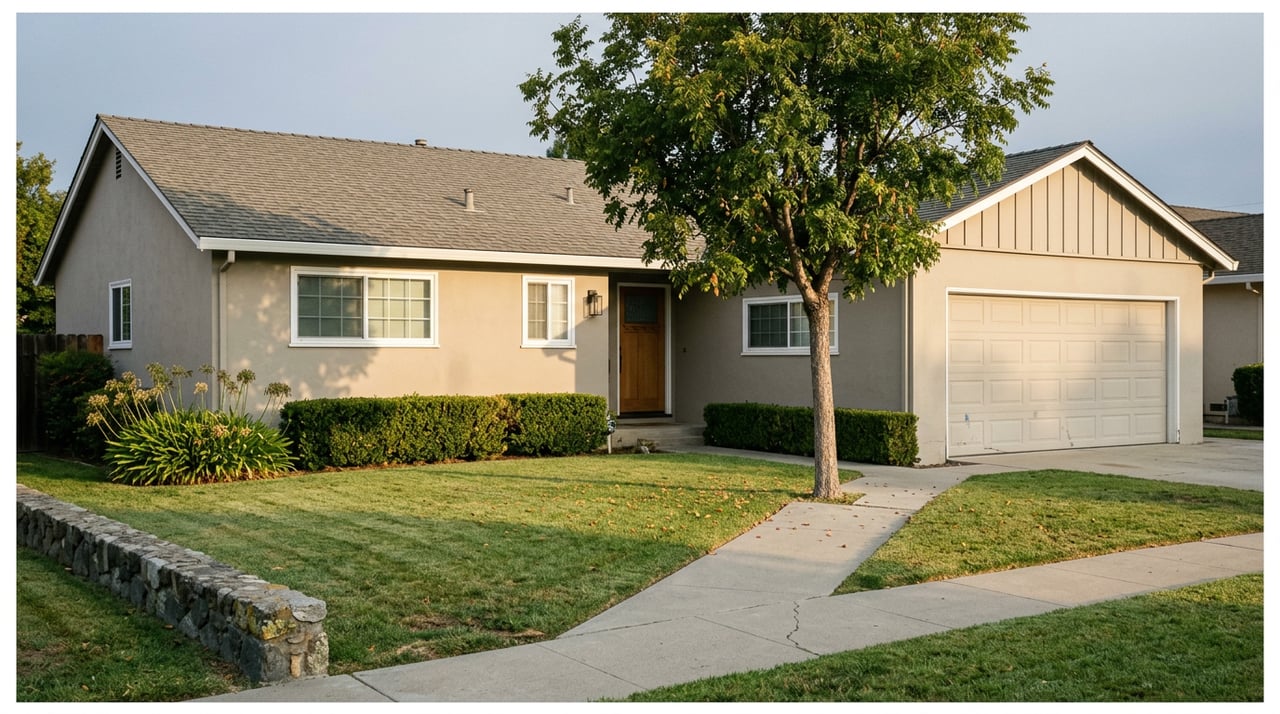
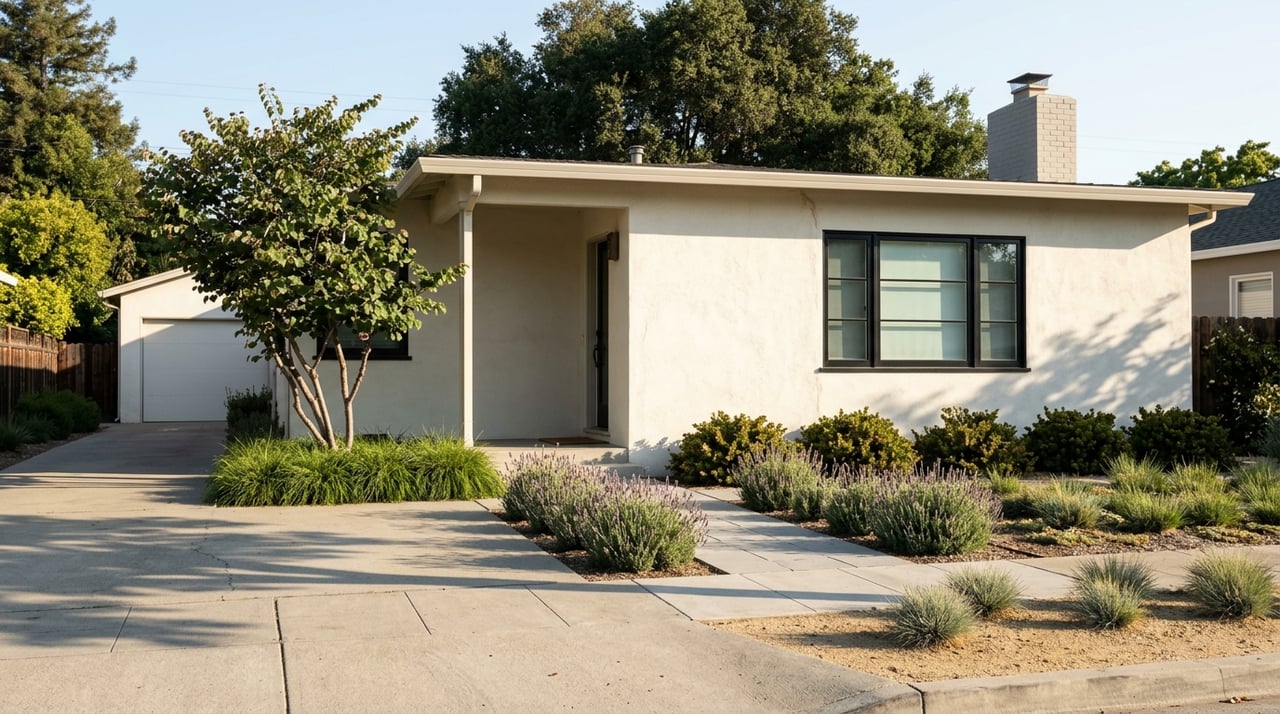
The two neighborhoods sit almost on top of each other, both bordered on the west by Alameda de las Pulgas and both a few blocks from downtown. White Oaks lots tend to run smaller, often 4,500 to 5,500 square feet, and its inventory skews toward restored bungalows starting near $1.5 million and larger traditional-style new construction pushing past $3 million. Howard Park's housing stock is mostly post-war ranch homes on lots closer to 5,000 square feet, but renovated versions are now trading between $2.2 million and $3 million or more. Redfin's Howard Park neighborhood page recently showed an average house price of $2.66 million, up 68.9 percent year over year, with a competitiveness score of 90 out of 100 against the citywide score of 58. That year-over-year jump is almost certainly another small-sample effect rather than actual appreciation of that scale, but it illustrates the point cleanly: a neighborhood this small can swing wildly month to month depending on which three or four houses happened to close.
What actually explains Howard Park's staying power is proximity, not perception. It sits closer to Burton Park and the north end of Laurel Street, has direct walking access to the Caltrain station, and includes streets like Eucalyptus Avenue, where the Halloween tradition draws trick-or-treaters by the hundreds every year. Buyers are paying for the walk, not the address.
Oak Park and the Hills Are Selling You Two Different Things
Between Belmont Avenue and Brittan Avenue sits Oak Park, a neighborhood with an origin story that still shapes what you get for your money. During the Depression, developers struggling to sell lots there cut them in half just to make the property taxes more affordable to buyers. That history is still visible on the ground. Homes at the center of Oak Park frequently sit on parcels of 5,000 square feet or less, tighter than almost anywhere else in the city.
Head west past Alameda de las Pulgas and the math flips entirely. San Carlos's hillside pocket, spanning areas like Devonshire Canyon, Cordilleras Heights, and Beverly Terrace, trades flat, walkable streets for space and topography. The city's own planning documents describe this part of town as hillside terrain with winding, contour-following roads, and Devonshire Canyon specifically is noted for narrow streets with generally no sidewalks. What buyers get in exchange is access to the Eaton and Big Canyon trail system, more than 73 acres of open space with hiking and running trails and bay views. Pricing in this segment typically runs $2.1 million to $2.9 million for a standard single-family home, with view-exposed properties clearing $3 million. Days on market tend to run longer here than in White Oaks or Howard Park, but list-to-sale ratios hold up well once the right buyer shows up. This isn't a slower market. It's a smaller pool of buyers who know exactly what they're looking for.
The Detail on Eaton Street That Has Nothing to Do With Reputation
Not every price difference in San Carlos traces back to walkability or lot size. Part of Eaton Street, which runs through the White Oaks area, sits along a creek. Homes on the south side back directly onto it, and buyers financing a purchase there should expect their lender to require flood insurance regardless of how desirable the surrounding blocks are. It's a detail that has nothing to do with a home's finish level or its distance from Laurel Street, and it's the kind of line-item cost that only shows up once you're deep into an offer, not while you're scrolling listing photos.
Laurel Street's Walkability Premium Is About to Get Bigger
The clearest structural driver of San Carlos's neighborhood-level price gaps over the past decade has been proximity to downtown. Single-family homes near Laurel Street typically list between $2.3 million and $3.2 million, while condos and townhomes in the downtown core run $950,000 to $1.6 million, a spread that has widened as the corridor filled in around the Caltrain-adjacent Beresford Square development.
That premium has more room to grow. The San Carlos City Council finalized the Downtown Specific Plan by second reading on January 26, 2026, and it took effect February 25, 2026, formalizing priorities around pedestrian design, bicycle access, and transit connectivity for the corridor. The 700 block of Laurel Street, set to become Centennial Plaza, got its final design approved the previous October, with a pedestrian-oriented plaza and a contemplated water feature. A few blocks over, Harrington Park's redesign will remove ten existing trees but replace each one, including new Engelmann Oaks and Sierra Red Oaks, with construction slated for spring 2026 following the city's late-2025 bid process. None of this changes what a home is worth today, but it's the kind of public investment that has historically preceded exactly the walkability premium White Oaks and Howard Park already command. Buyers weighing a slightly farther walk from Laurel Street to save on price should factor in that the gap they're avoiding is likely to widen, not shrink.
What This Means If You're Comparing Neighborhoods
The lesson isn't that San Carlos data is unreliable. It's that a single median, from any source, is a poor stand-in for a city built out of half a dozen distinct micro-markets that don't move together. White Oaks and Howard Park compete on walkability and a decades-old rivalry that the price-per-square-foot numbers settled years ago even if the reputation hasn't fully caught up. Oak Park trades lot size for proximity because of a decision developers made during the Depression. The hills trade convenience for trail access and privacy. And the downtown corridor is still absorbing public investment that hasn't finished showing up in prices.
If you're comparing streets rather than citywide averages, that's the right instinct. The number that matters is the one specific to the block you're actually considering, not the one aggregated across a city that hasn't behaved like a single market in more than a decade.
Frequently asked questions
Is San Carlos currently a buyer's market or a seller's market? Inventory has stayed tight through 2026, with San Carlos-wide months of supply around 0.8 in the first quarter and homes across most neighborhoods selling at or above list price. That favors sellers overall, though pace and pricing power still vary meaningfully by neighborhood.
Do all San Carlos homes near creeks require flood insurance? Only specific parcels, such as those on the south side of Eaton Street that back directly onto the creek, typically trigger a lender requirement. It's worth confirming with your lender and a title search early in any offer on a property near water in San Carlos rather than assuming it based on the neighborhood name alone.
If you're trying to figure out what a specific San Carlos street is actually worth right now, rather than what the citywide median suggests, Robert Pedro can walk you through recent closings block by block and get you a straight valuation on your own home or a target property before you make an offer.